How many letters actually fit on a nameplate
A nameplate is ten millimetres tall whatever is cut into it, and it takes up to fifteen characters. So length runs sideways: a ten-letter name is a wider pendant than a six-letter one, it hangs differently, and the script you pick matters more than the metal does.
The plate does not get taller
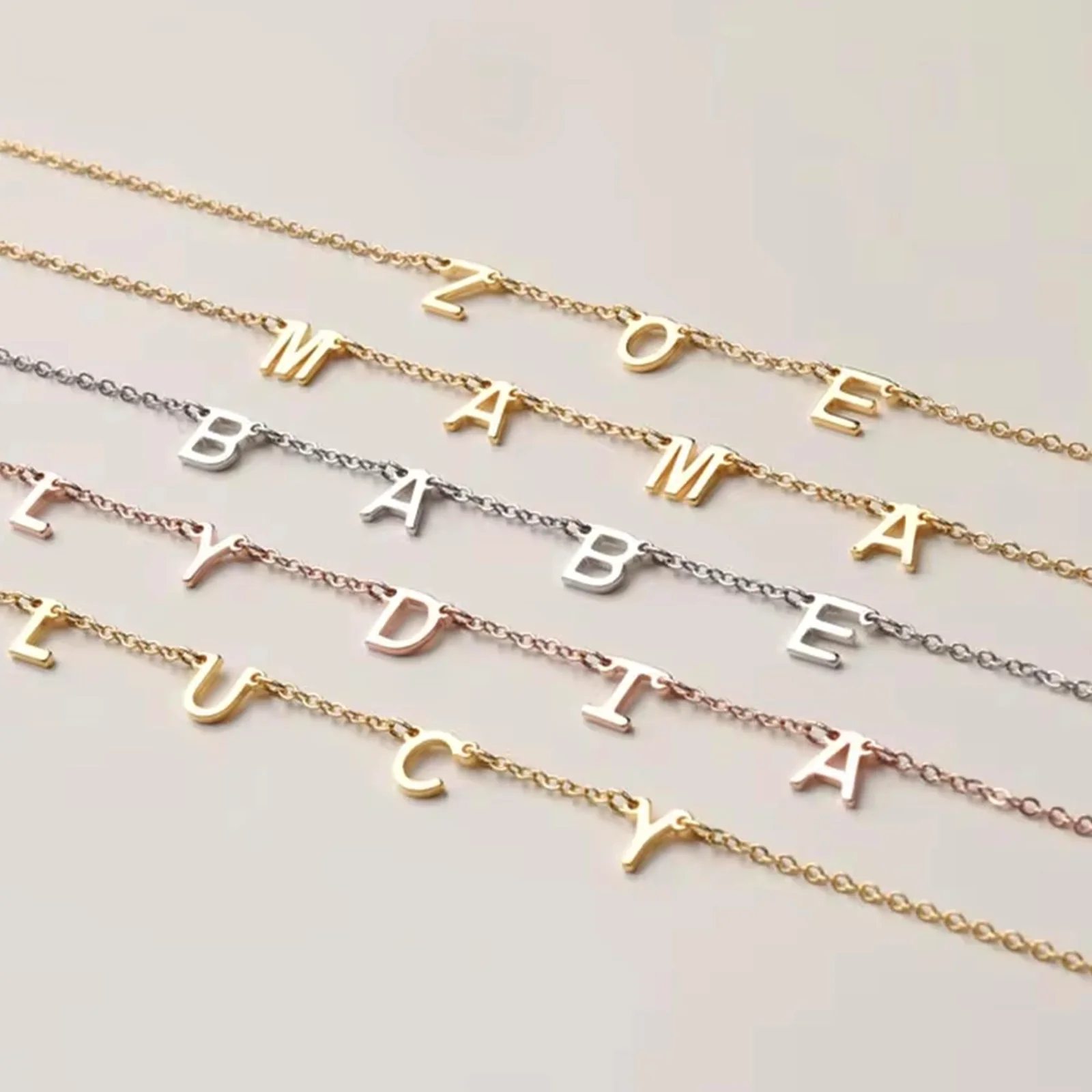
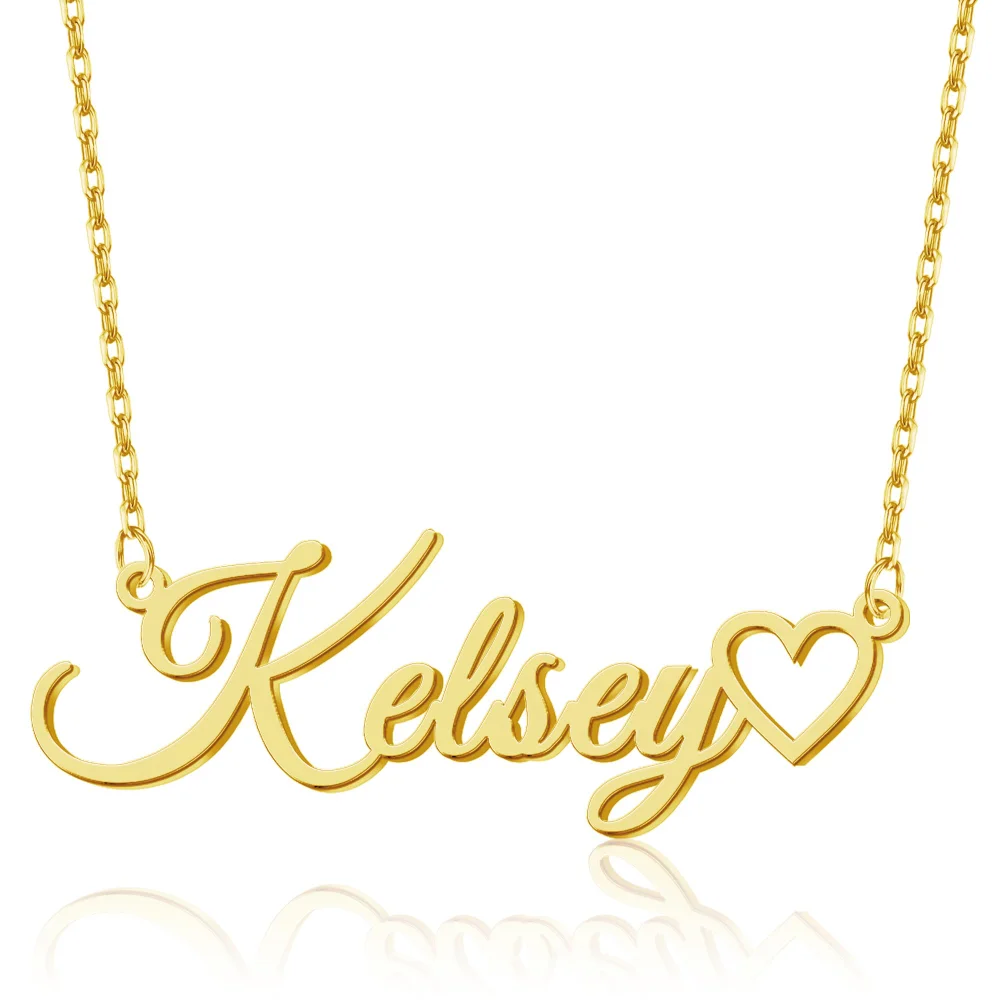
A nameplate comes with a fixed vertical space. The cursive nameplate is 10 mm tall, or 0.39 inch, whatever you write on it. Height is constant. That matters because a longer name does not shrink to fit. It stretches horizontally instead. The plate is 1.2 mm thick. Up to 15 characters are permitted on the cursive plate. Spaces, hyphens and punctuation count as characters in that allotment. When you type a name that approaches the limit, letters sit closer together and the finished piece becomes wider rather than shorter. Plan for that width against the chain lengths available. The plate arrives on one of five chains: 14, 16, 18, 20 or 22 inches. A very wide plate on a short chain sits higher on the neck and can overlap a collar. Conversely, a narrow plate on a long chain will hang lower than you expect. The plate is cut from a single sheet of metal. In cursive style the letters are joined through their tails because the cut is continuous. That link between letters influences the visual balance and how the name reads at a glance. If your name contains several letters with long tails or descenders, the joins will take more horizontal space. If you prefer even spacing or block separation, consider a different style. Nothing personalised can be un-cut. Once the plate is made the letters are final. Check the spelling and the exact sequence of characters before you finish the order.
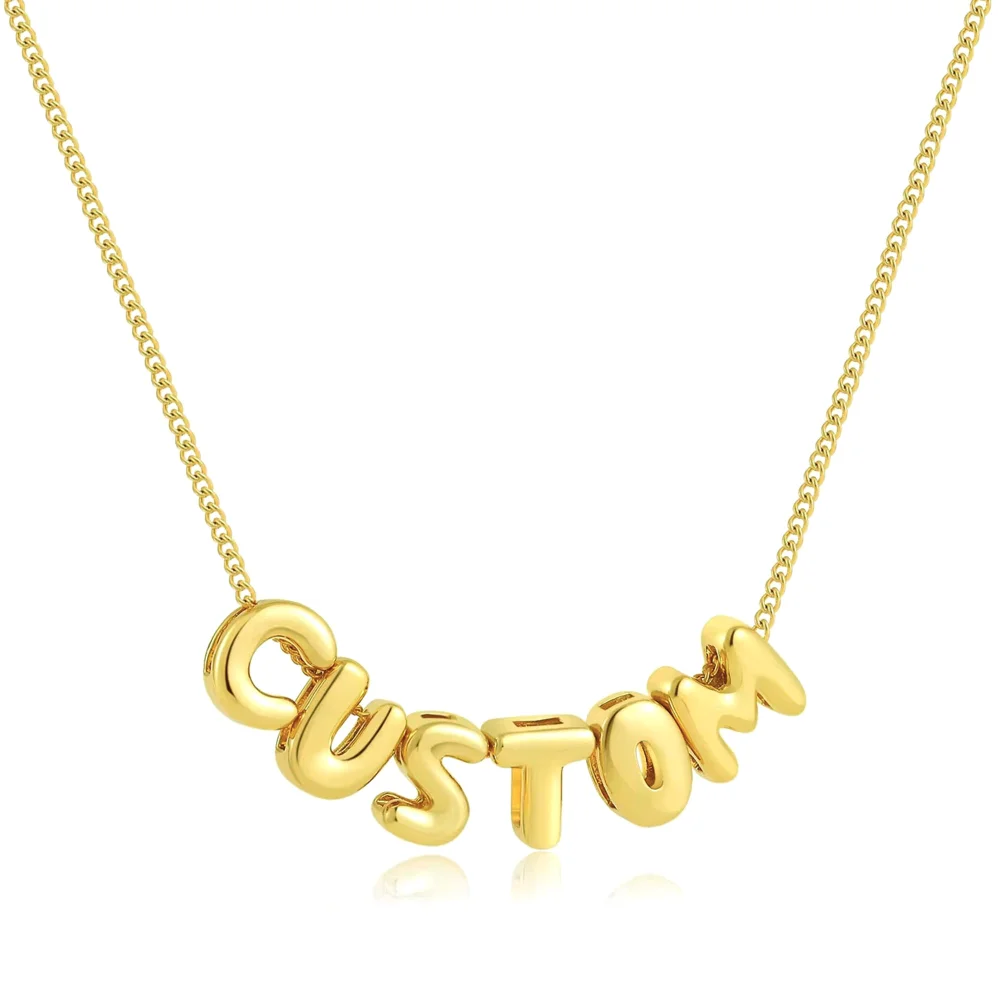
Yofair Gold plated bubble letter necklace
18K gold plated over stainless steel · Bubble letters
$14.99
Cursive, and why the letters hold each other up
Cursive lettering on a nameplate behaves like connected architecture. Each stroke leans on the next because the plate is cut as one piece. That continuous cut demands a minimum thickness. For the cursive plate that thickness is 1.2 mm. Letters join at tails and connectors, so individual forms cannot float free. If you choose a long name within the 15-character allowance, expect the joins to lengthen the overall piece instead of compressing the letterforms. A consequence is readability. Names with repeated letters or tight curves may appear dense when condensed into a longer string. Contrast that with a short name. It reads as an open, airy line where each loop and flourish has room to show. What you type determines the negative space between letters. Capital letters at the start alter how the first join behaves because they often have larger initial strokes. A name entirely in capitals will instruct a different cut behavior than the same name in mixed case. The plate height remains 10 mm. This fixed vertical measure preserves the look across names but forces horizontal variation as the only way to accommodate extra characters. The sheet-cut nature also affects scripts that read right to left. An Arabic nameplate will be cut right to left from the script as typed, so you must enter the characters in the intended visual order. The permanence of the cut is worth repeating. Once the cursive plate is made you cannot undo the cut. Verify capitals, punctuation and spacing before you finalise.
Bubble letters, and what changes when they stand apart
Bubble letters take a different approach to spacing because each character is separate. The bubble letter necklace is offered from the 26 letters A to Z. You choose specific letters rather than a continuous, joined name. The forms are daintier than a regular cut-letter necklace, which makes them visually lighter on a short chain. The card recommends the bubble letters for a choker length or for layering with other necklaces. When letters stand apart the eye reads gaps as part of the design. This effect can make very short names or initials read more clearly at a distance. If you want a single initial or a two-letter monogram, the bubble style gives distinct shapes that do not rely on connecting strokes. There is less horizontal stretch if you add letters, because each letter occupies its own footprint. That footprint is generally narrower than a joined script when measured per letter, so a chain that would feel crowded with a long cursive name may still work with several bubble letters. The separate characters also change how pendants swing and settle. Each letter moves in its own plane and may rotate slightly on thinner chains. If you plan to layer, choose chain lengths that keep pendants from colliding. A choker or a short 16 inch option keeps bubble letters visible above a longer chain. Most of the jewelry is 18K gold plating over stainless steel. Some pieces are 925 sterling silver. The material choice does not alter character choice, but it does influence overall weight and feel when you wear layered pieces.
The bar, for the thing that is not a name
The engraved bar pendant is designed to hold short blocks of information rather than a flowing signature. The bar measures 35 mm tall and 5 mm wide. Each side can take up to 30 characters, and the pendant is engravable on four sides. Use that capacity to distribute text. For example, a date on one side, coordinates on the next, a name on a third and a short note on the fourth fits within the design constraints. The bar is offered on 16, 18, 20 and 22 inch chains. That range lets you decide where the engraved faces sit relative to clothing and collarbones. Text that reads as a short line or a compact code tends to suit the bar best. Longer sentences will require planned line breaks across sides, which affects how someone reads the piece when it is worn. Engraving is literal. Characters appear in the sequence you submit. If you use commas, periods or other punctuation, count them toward the 30-character limit for that side. The bar works well for numeric or alphanumeric information that benefits from a linear arrangement. Coordinates, dates and short lines occupy a narrow vertical band gracefully. The plate cut styles and engraving styles respond differently to typography. Small capitals or condensed fonts can increase legibility, but font selection is part of the checkout process rather than the cutting step. The permanence rule applies here as well. Once the bar is engraved the text cannot be removed. Confirm spacing and punctuation deliberately, and keep in mind that you can split a longer inscription across faces to preserve clarity.
Where else a name goes: a hoop, a bead, a band
Names do not only live on necklaces. A hoop, a bead and a ring each impose their own rules. The name hoop earrings have a 30 mm diameter and accept up to 8 characters. That tight allowance suits short names, nicknames and initials. The men's braided leather bracelet can carry between 2 and 8 steel beads. Each bead measures 6 by 12 mm and can take up to 10 characters. You therefore think in bead count as well as total character space. A bracelet with two beads gives two separate surfaces; a bracelet with eight beads distributes text across more pieces. The sterling silver name ring has a band 1 cm tall, which gives a substantial vertical field for a cut name. Plan carefully because a ring with a name cut into the band cannot be resized afterwards. If you need flexibility the ring may not be the best choice. The materials available are mostly 18K gold plating over stainless steel with some items in 925 sterling silver. These materials determine finish options rather than character limits. An Arabic nameplate is cut right to left from the script as typed and that directional rule matters for any piece produced in Arabic script. The placement of a name within small formats requires attention to spacing, punctuation and case. Below is a quick comparison to help you match the form to the content.
| Piece | Character limit | Size figure | Suits |
|---|---|---|---|
| Cursive nameplate | Up to 15 characters | 10 mm tall, 1.2 mm thick | Joined script names |
| Bubble letter necklace | Single letters from A to Z | Daintier than regular cut letters | Choker or layering, initials |
| Engraved bar pendant | Up to 30 characters per side | 35 mm tall, 5 mm wide, four sides | Dates, coordinates, short lines |
| Name hoop earrings | Up to 8 characters | 30 mm diameter | Short names, initials |
| Men's braided leather bracelet (per bead) | Up to 10 characters per bead | Each bead 6 by 12 mm; 2 to 8 beads | Distributed text across beads |
| Sterling silver name ring | Dependent on band size | Band 1 cm tall | Names on a ring; note no resizing afterwards |
Choosing the chain once you know the width
Chain choice follows from the horizontal width of the piece you order. A wide cursive plate that uses the full 15 characters will occupy more horizontal real estate than a short plate. Select a chain length that places that width where you want it on the chest. Shorter chains like 14 or 16 inches position a plate high near the collarbone. Longer chains such as 20 or 22 inches position a wide plate lower, which can help when the plate approaches collar width. The engraved bar offers slightly different variables. It comes on 16, 18, 20 and 22 inch chains. Because the bar is taller than it is wide, it tends to sit vertically on the chest. If you supply text across multiple faces, think about how the bar will twist and which face will present outward most of the time. Bubble letters are often shown as chokers or layered pieces. If you plan to layer, stagger chain lengths by at least two inches to avoid letters colliding. The men's braided leather bracelet does not use a chain; plan according to wrist circumference and bead count. The ring is defined by ring size and band height, not chain length. Material considerations overlap with chain decisions. Most chains and plates are 18K gold plated over stainless steel. Some chains and rings are 925 sterling silver. Choose metal finish to match other pieces you intend to wear. Finally, anticipate movement. Narrow chains allow more rotation than thicker ones. A wide plate on a thin chain will pivot more, which can affect how the name sits. Balance the width of the personalised piece with the chosen chain to keep the text readable and positioned where you expect.
Reading a spelling back before it is cut
Spelling is the single most important check because a personalised item cannot be un-cut. Follow a short verification routine. First, copy the exact text you intend to send into a plain editor and count characters. Include spaces and punctuation in that count. Ensure the name fits the specific character limits: 15 for the cursive plate, 30 per side for the engraved bar, 8 for the hoops, and up to 10 per bead on the braided bracelet. Confirm ring band text as well, remembering that ring cuts cannot be resized afterwards. Second, check directionality for scripts that are not left to right. An Arabic nameplate is cut right to left from the script as typed. Enter the characters in the order they should appear when worn. Third, review capitalization and punctuation. If you use an apostrophe, a hyphen or a period you are using up part of the character allowance. Fonts and casing influence legibility. The name, the spelling and the font are typed in at our retail partner's checkout. We never see them, and a change after the order is a message to them. Fourth, visualise placement. For a long cursive name count whether the plate width will sit comfortably on the chosen chain length. For a multi-bead bracelet verify the bead count and which beads will carry which segments of text. Finally, read the final checkout text aloud slowly or have someone else read it back. A fresh pair of eyes catches transposed letters and mis-typed accents. Nothing personalised can be un-cut, so make this reading the deliberate last step before you complete the order.
Three more pieces like this one sit in the journal, we at Yofair keeps every nameplate, bracelet and blanket one click away on the front page, and the sources behind every statement about metal, about the law and about where a baby sleeps are listed on how we update the catalogue.